

The Blue Lotus and the Art of Nourishing Your Water
There is a quiet intelligence in water.
It moves, adapts, softens, holds, cleanses, reflects, and remembers.
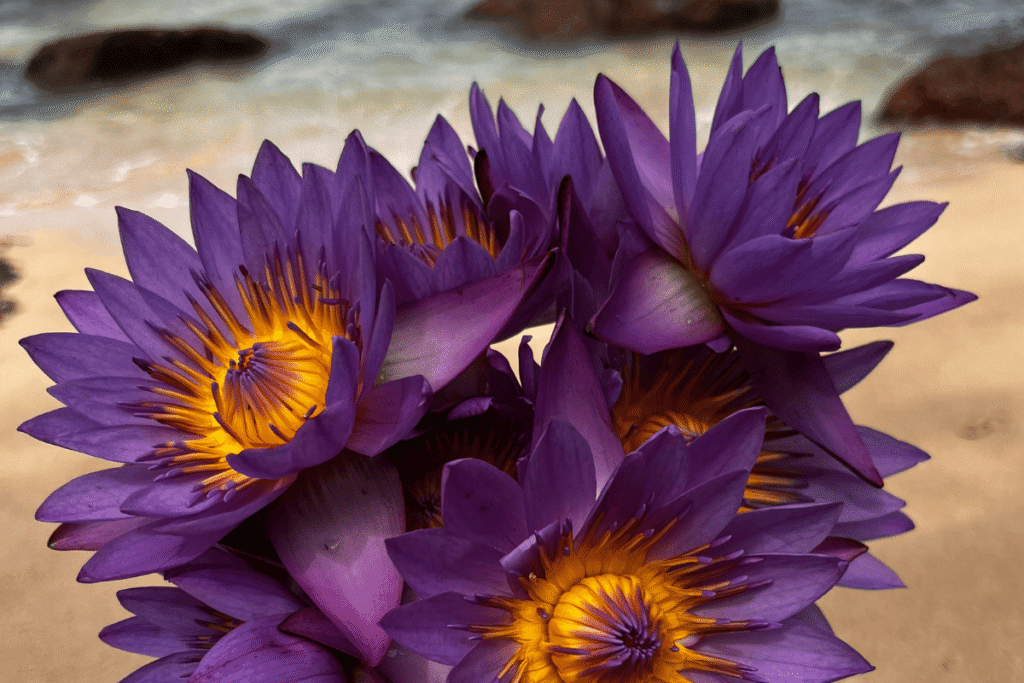
And at the center of this fluid wisdom sits a plant that has long been connected to calm, clarity, and awakening: the blue lotus.
Across ancient landscapes—from the Nile to the Ganges—the blue lotus was not merely a flower but a symbol of presence and expanded awareness. When we look at it through the lens of “nourishing your water,” it becomes a reminder of how to tend to the inner fluidity that supports relaxation, emotional ease, mental clarity and a sense of flow in life.
The blue lotus is both a plant and a metaphorical guide: a companion for softening stress, cooling the heated parts of life, and reconnecting with what many call our “blue mind”—the calm, contemplative state we experience around water.
The Water Within Us
We are, physiologically, mostly water. But we are also emotionally water—shifting states, flowing moods, tides of stress and clarity, ripples of tension and release.
To nourish your water means to tend to your:
~inner fluidity (ease in the body and mind),
~internal clarity (like water settling after turbulence),
~emotional temperature (cooling the heat of overwhelm),
~sense of flow (moving through life rather than bracing against it).
When stress accumulates, our inner water often feels stagnant, turbulent, overheated or dried out. Practices, plants, and places that reconnect us to a sense of blue-space calm help our inner water clear, renew and replenish. The blue lotus is one of nature’s most water nourishing plants symbolically and practically.
Blue Lotus: A Flower of Calm Waters
The blue lotus (Nymphaea caerulea) is a water lily that has been associated for thousands of years with states of tranquility and soft attention. While historical traditions have used the flower in different ways, today many people engage with blue lotus gently—as tea, aroma, topical oil, ritual, or a meditation focal point—not as a medical treatment but as an experience.
What matters is not the physical plant alone but the symbolic, sensory, and ritual context it provides. The fragrance, the color, the shape, the water-based life of the plant—all invite the nervous system to soften.
When we approach blue lotus through the metaphor of nourishing our water, it becomes:
~a symbol of cooling the internal heat of stress,
~a reminder of buoyancy when life feels heavy,
~an anchor for slow presence in a fast world,
~an invitation to experience clarity rising from stillness, the way a lily rises from a calm pond.
Blue Mind, Blue Spaces, and the Lotus Effect
Marine biologist Wallace J. Nichols popularized the idea of the “blue mind”—the calm, meditative mental state that water environments evoke. Lakes, oceans, rivers, even baths and pools help many people access:
~reduced mental chatter
~improved clarity
~softened anxiety
~deepening of the breath
~relaxation of the body
~a sense of spaciousness and peace
The blue lotus, rooted in water, reflects the same qualities as blue spaces:
1. Stillness you can feel
The flower thrives only where the water is stable enough for petals to open. This mirrors the way humans unfold when our environment quiets.
2. Clarity rising from beneath the surface
Lotus roots anchor deep in murky water, yet what emerges is pristine. Many people use the plant symbolically to explore their own emergence from stress, stagnation, or overthinking.
3. Soft focus instead of hard control
Water doesn’t force direction—it follows the path of openness. Blue lotus rituals often encourage a similar release of tension: a gentle softening rather than a push for perfection.
When paired with blue-space practices—walking by water, listening to water sounds, bathing, floating, or simply visualizing calm water—the lotus becomes a companion to cultivating your own “blue mind.”
Nourishing Your Water Through Ritual
A self-care ritual can be a simple act infused with meaning. There is no need for it to consume extensive time or to be overly elaborate.
What matters most is intention, presence, and giving yourself permission to slow down.
Below are a few gentle ways people weave the flower into a calming ritual that invites relaxation and fluidity:
1. A Tea Ritual for Slowing Down
Brewing blue lotus tea becomes a moment of transition—like stepping from turbulent waters into stillness. The warmth, aroma, and soft floral notes support deeper breathing, clearer awareness, and a gentle recalibration of your inner landscape.
2. Aromatically
The scent of blue lotus has a subtle, dream-like quality. Used intentionally—whether through essential oils, incense, or aromatic blends—it can help shift attention away from mental noise and back toward the body, breath, and present moment.
3. Topically
Blue lotus infused in organic oils can be used as a topical ritual for the face or body. This is about the naturally hydrating, properties of the oil and the sensory experience:
~slow, nurturing touch
~the grounding scent
~the cooling, calming symbolism of the lotus
~a moment of presence with your own skin and body
Applied gently after a shower, before bed, or as part of a self-massage practice, it becomes a tangible way to nourish your water—soothing the surface while inviting deeper inner softness.
4. Meditation with the Symbol of the Lotus
Whether you meditate with a dried blossom, an image, or a visualization, the lotus can serve as a steady anchor. Many people use this symbol to support:
~relaxation
~emotional cooling
~mental clarity
~a sense of rising above overwhelm
The lotus opens only when the water is calm enough to hold it—reminding us to cultivate the conditions that allow our own ease to unfold.
5. Water-Based Practices
Water is one of the most direct ways to access the “blue mind” state. The blue lotus, being a water flower itself, naturally complements these practices.
At-Home Bathing Rituals
A warm bath becomes a personal sanctuary—
a place for the body to release tension and the mind to drift toward slower rhythms.
Adding blue lotus tea, infused oils, or petals (even symbolically) can enhance the sense of softness and stillness.
Water in Nature
Spending time in natural blue spaces—rivers, oceans, lakes, or even dipping your feet into a calm shoreline—amplifies the soothing qualities associated with the lotus.
These environments invite:
~deeper exhale
~quiet contemplation
~a sense of being held by something larger
~the cooling of mental and emotional heat
Whether floating, wading, listening, or simply observing the movement of water, this connection nourishes your inner water in a profound, elemental way.
Cooling Stress and Softening the Inner Waters
Stress often feels like internal heat—tight, inflamed, pressurized.
Nourishing your water is about cooling the system in non-medical, holistic ways:
~slowing your pace
~hydrating mindfully
~seeking blue spaces
~practicing gentle breathwork
~incorporating calming sensory rituals
~reconnecting with symbols that evoke ease
The blue lotus becomes a visual and sensory reminder of these qualities.
It is a flower that opens only when the water supports it—teaching us that our own calm and clarity emerge when we care for the environment within and around us.
Clarity, Ease, and Flow
When your inner water is nourished:
~thoughts settle
~your breath deepens
~emotions soften
~decisions feel clearer
~creativity rises
~the body relaxes into presence
The blue lotus, with its serenity, beauty, and connection to water, is a guide and companion for this kind of inner fluidity.
A Closing Reflection
Imagine yourself as a pond at dawn.
The surface is quiet.
The light is soft.
A blue lotus begins to open—slowly, naturally, without pressure.
This is the essence of nourishing your water.
A practice of gentle self-tending.
A devotion to inner ease.
A reminder that clarity doesn’t come from forcing stillness, but from allowing the waters to settle on their own.
And when they do, your own lotus can rise.